
If you run a business with 5 to 250 employees, it is essential to understand that in 2026, cybercriminals are no longer focused solely on large corporations. They are now targeting businesses like yours.
The cyber threat landscape has evolved rapidly. Attacks are now faster, more sophisticated, and highly automated, with small businesses increasingly targeted. The Verizon 2025 Data Breach Investigations Report found that 19% of small businesses experiencing a cyberattack are forced into bankruptcy. According to a VikingCloud 2025 survey, 40% of SMBs report that a cyberattack costing $100,000 or less could permanently close their business. Notably, 94% of SMBs faced at least one cyberattack in 2024, and 78% fear a breach could put them out of business.
You do not have to face these challenges alone. At KT Connections, we help protect businesses from cyber threats locally and nationwide. This post outlines the top cybersecurity threats for 2026, provides supporting data, and explains how the right security partner can safeguard your business, employees, and customers.
Threat #1: AI-Powered Phishing
Phishing remains the leading entry point for cyberattacks, but in 2026, attackers are leveraging artificial intelligence to create emails, voice calls, and text messages that closely mimic legitimate communications from banks, vendors, or company leadership.
82.6% of phishing emails are now AI-generated, a 53.5% year-over-year increase. (Keepnet/VIPRE, 2025)
AI-generated phishing emails have a much higher click rate than traditional phishing attempts. AI-assisted attacks reach a 54% click-through rate, compared to 12% for standard phishing. Over 90% of cyberattacks begin with phishing, making it the most critical threat vector for businesses.

The threat extends beyond email. Voice phishing, or “vishing,” where AI replicates a trusted person’s voice to contact employees, increased by 442% from 2023 to 2024. In one notable case, a finance employee at a global firm transferred $25 million to fraudsters after a deepfake video call impersonated the company’s CFO and senior leadership using AI-generated faces and voices.
These risks affect organizations of all sizes. Employees at small businesses face social engineering attacks at 3.5 times the rate of those at large enterprises, and 95% of cybersecurity incidents at small and mid-size businesses involve human error.
How KT Connections Helps
Our cybersecurity services use a layered approach to phishing defense. We implement Multi-Factor Authentication (MFA) to ensure a stolen password cannot compromise an account. We apply identity management controls to restrict user access, minimizing the impact of any successful attack. We also proactively monitor your network to immediately flag unusual behavior and prevent phishing attempts from escalating.
Threat #2: Ransomware
Ransomware, which encrypts business data and demands payment for its release, remains one of the most damaging threats to small and mid-sized businesses. The Verizon 2025 Data Breach Investigations Report found ransomware involved in 88% of breaches at small and medium-sized businesses, compared to 39% at large organizations. For small businesses, ransomware is the most likely attack method. The financial impact is significant: Sophos’ 2025 report found the average recovery cost for SMBs with 100–250 employees was $638,536, excluding any ransom payment.
Ransomware operators have industrialized their methods. Groups now offer “Ransomware-as-a-Service,” franchising attack tools to criminal affiliates who rent the infrastructure and share the profits. This automation allows attackers to target hundreds of small businesses at once with minimal effort. Over two-thirds of ransomware attacks between 2024 and 2025 targeted businesses with fewer than 500 employees.
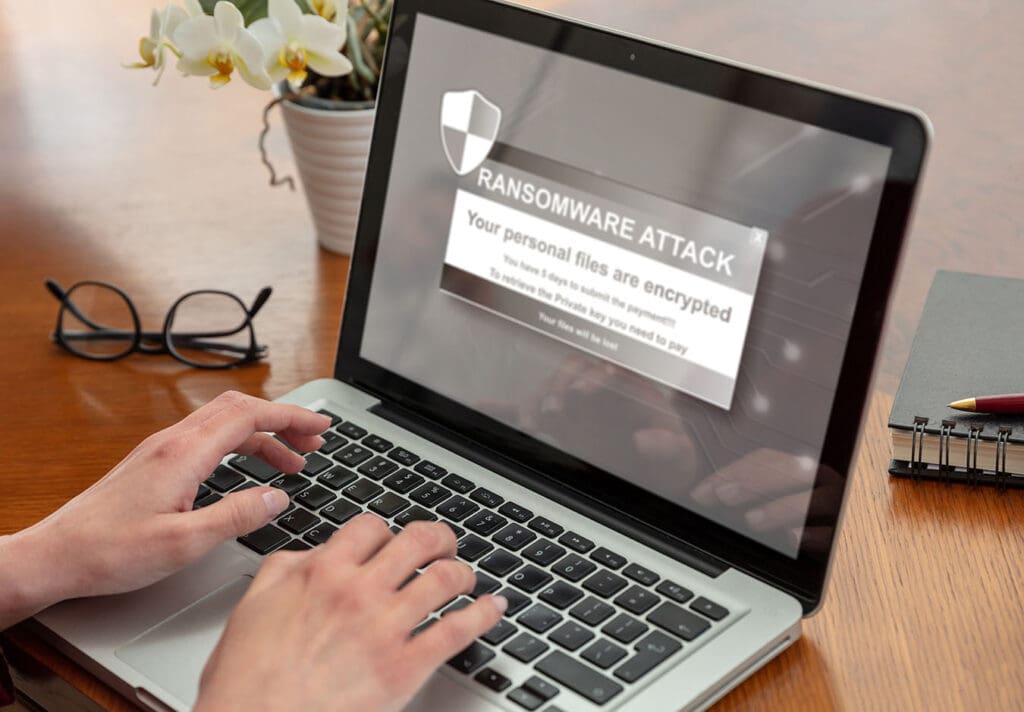
The financial impact is severe. In 2025, the global average cost of a ransomware breach reached $5.08 million. For small businesses, costs ranged from $120,000 to $1.24 million, which can be business-ending. Notably, 75% of SMBs report that they could not continue operating after a ransomware attack.
Attackers are also moving quickly. Once inside a network, modern ransomware operators have a median dwell time of just 4–5 days from initial access to full system encryption. Without proactive monitoring, there may be little time to respond before the damage is done.
This threat is especially dangerous because 96% of ransomware attacks target backup locations first. Attackers understand that businesses with reliable backups are less likely to pay, so they compromise backups before deploying ransomware.
How KT Connections Helps
For this reason, KT Connections provides proactive network monitoring and comprehensive cloud backup and disaster recovery solutions. Our Remote Monitoring & Maintenance service ensures our Network Operations Center (NOC) monitors your systems continuously, detecting unusual activity and generating tickets for our technicians before threats escalate.
Our Cloud Backup and Disaster Recovery service follows the industry-standard 3-2-1 rule: three copies of your data, stored in two formats, with one copy secured offsite and encrypted. By backing up your data offsite and out of reach of attackers, we provide a reliable safeguard against ransomware.
Threat #3: Supply Chain and Third-Party Vulnerabilities
One of the fastest-growing attack vectors in 2026 is not a direct attack on your business. Instead, attackers target the vendors, software providers, or cloud platforms your business relies on.
In the first half of 2025, supply chain attacks accounted for less than 5% of all data compromises but affected nearly half (47%) of all individuals affected. (Identity Theft Resource Center, 2025)
Supply chain attacks target third parties with legitimate access to your systems or data, such as billing software providers, payroll platforms, marketing tools, or any SaaS applications your team uses. Once attackers compromise a vendor, they gain trusted access to every business that vendor serves. In April 2026, two major U.S. banks were breached simultaneously through a single shared third-party vendor, rather than through their own networks.

According to IBM’s X-Force Threat Intelligence Index 2026, large supply chain incidents have increased nearly fourfold over the last five years. Third-party vendor compromise was the second most prevalent and second costliest attack vector, averaging $4.91 million per incident. Even more concerning, supply chain breaches take the longest to detect and contain, averaging 267 days from breach to containment.
For small and mid-size businesses, this risk is often overlooked. While your own systems may be secure, you likely have limited visibility into the security of the many platforms your team uses daily.
How KT Connections Helps
KT Connections’ identity management solution enables your business to control who can access specific resources and from which locations. By managing user authorizations and creating virtual profiles for each employee, we reduce the risk of a compromised vendor credential affecting your organization. Combined with our Unified Threat Management (UTM) platform, which filters all traffic through enterprise-grade antivirus, anti-spyware, intrusion detection, and content filtering, we establish multiple layers of defense to limit the impact of any single attack.
Threat #4: Credential Theft and Account Takeover
Not all cyberattacks are immediately visible through locked files or ransom demands. Some of the most damaging breaches occur quietly when attackers gain access to legitimate employee accounts and begin exploring sensitive information.
Account takeover attacks, in which criminals use stolen usernames and passwords to impersonate employees, are increasing rapidly. Credential phishing attacks rose by 703% in the second half of 2024 alone. Once inside, attackers can steal customer data, access financial systems, send fraudulent communications, or prepare for a future ransomware attack.
Adversary-in-the-middle (AiTM) attacks, which bypass multi-factor authentication by intercepting session cookies in real time, increased by 146% in 2024 (APWG, 2025).
Password hygiene remains a significant vulnerability. Many employees reuse passwords across personal and business accounts, so a breach at an unrelated website can compromise your business systems. Even organizations with basic MFA are discovering that advanced attackers have developed methods to bypass these protections.
Insider threats present an additional risk. Whether caused by a disgruntled employee or a staff member using unapproved applications (“Shadow IT”), unauthorized access to sensitive data is a significant and often overlooked vulnerability for small and mid-size businesses.
How KT Connections Helps
Strong credentials and identity hygiene are central to our cybersecurity strategy. We implement Multi-Factor Authentication (MFA) across all accounts, centrally manage user identities and access permissions, and use our UTM platform’s leak prevention and content filtering to monitor for unusual access patterns. We also assist businesses in establishing clear policies for password management and acceptable technology use, as security is only as effective as the habits of its users.
Threat #5: Cloud Vulnerabilities & Data Exposure
Cloud-based operations offer significant flexibility and productivity, but they also introduce new attack surfaces that many organizations have not fully addressed. Misconfigured environments, excessive access permissions, and unsecured applications provide opportunities for attackers.
Cloud adoption continues to grow, as does attacker interest in these environments. IBM’s X-Force team reports that threat actors increasingly target cloud-connected development and operational systems, exploiting misconfigured containers, excessive permissions, and incomplete logging. In one 2026 incident, an employee granted broad permissions to a third-party AI tool, allowing attackers access to an entire cloud platform.
For organizations using Microsoft 365, Azure, or other cloud-based collaboration and storage tools, these risks are significant but manageable. Ensure your cloud environment is properly configured, continuously monitored, and regularly backed up to enable rapid, complete recovery.
How KT Connections Helps
Our cloud solutions portfolio includes Microsoft 365, Azure, OneDrive, and SharePoint. We manage and configure each with security as a priority. We do not simply set up your environment and leave; our ongoing monitoring keeps your cloud secure as your needs evolve.
Most importantly, our Cloud Backup and Disaster Recovery service ensures your critical business data, including documents, databases, system configurations, and applications, is encrypted, securely stored offsite, and quickly recoverable. In the event of a breach, hardware failure, or natural disaster, we restore your systems to full functionality with minimal downtime. This is not just a technology benefit; it is essential for business continuity.
What Actually Protects a Business in 2026
As threats evolve rapidly, relying on a single security tool or annual review is insufficient. Data consistently shows that businesses need a layered, proactive, and continuously managed security approach.
This approach includes the following key components:
- A UTM platform that filters all internet traffic through multiple security layers before it reaches your devices
- Identity and access management that precisely controls user access, reducing the risk associated with compromised accounts
- Multi-Factor Authentication (MFA) on all accounts, providing the most effective credential protection available
- 24/7 remote monitoring and maintenance to detect and address threats early, before damage occurs
- Encrypted, off-site cloud backups with a tested disaster recovery plan, ensuring ransomware cannot compromise your business operations
- Employee awareness training and clear acceptable-use policies, recognizing that employees are both a potential vulnerability and a critical first line of defense
KT Connections implements this framework for every client, creating a tailored security posture that aligns with each business’s unique operations rather than offering a generic solution.
Take Security Seriously Before an Incident Occurs
Businesses most affected by cyberattacks are often those that believed they were not at risk. Data from 2026 clearly shows that no business is too small or obscure to be targeted.
KT Connections serves businesses in the Black Hills region and nationwide, providing comprehensive cybersecurity and cloud solutions to support your operations. Whether you are establishing new protections or enhancing existing ones, we are ready to assist.
To assess your current security posture, learn more about our cybersecurity and cloud services, or contact our team to schedule a review.